Enhanced Rock Weathering (ERW) has emerged as a frontier solution in the Nature-based Solutions (NbS) landscape, uniquely connecting geochemical processes with agricultural systems. For institutional investors and climate strategists, it provides large-scale, long-duration Carbon Dioxide Removal (CDR) while simultaneously enhancing food security and ecosystem resilience. The fundamental mechanism of ERW involves the acceleration of the Earth’s natural chemical weathering process. By crushing silicate rocks—such as basalt or olivine—into a fine powder to increase their reactive surface area and spreading them onto agricultural lands, the process facilitates a chemical reaction between minerals and atmospheric carbon dioxide (CO2) dissolved in rainwater. This reaction converts the carbon into stable bicarbonate ions that eventually drain into the oceans, where they remain sequestered for intergenerational timescales exceeding 1,000 years.
The urgency of ERW deployment is underscored by recent IPCC assessments which conclude that deep decarbonization alone is insufficient to meet the 1.5°C target set by the Paris Agreement; substantial CDR capacity will be required to neutralize residual "hard-to-abate" emissions. Unlike biological sinks such as forests or soil organic carbon—which are susceptible to reversals from wildfire, disease, or shifts in land management—ERW offers greater durability through chemical stability, aligning with the Oxford Offsetting Principles and the Science-Based Targets initiative (SBTi) guidance for long-duration removals. This positions ERW as a high-integrity asset for corporate net-zero portfolios. Beyond its primary carbon removal function, ERW presents an "agronomic win-win." The weathering process releases essential macro and micronutrients, that nourish crops and improve soil structure. In a world facing rising fertilizer costs and widespread soil degradation, the ability of ERW to act as a natural liming agent—neutralising soil acidity—provides a meaningful economic incentive for adoption by the farming community.
From a strategic investment perspective, ERW is notable for its reliance on established industrial technologies. The mining, grinding, and spreading of rock materials largely leverage existing infrastructure rather than requiring entirely novel, energy-intensive machinery. This reduces barriers to scale-up compared to engineered solutions like Direct Air Capture, provided that the monitoring, reporting, and verification (MRV) frameworks can be sufficiently matured to provide scientific certainty to buyers. The issuance of the first independently verified ERW carbon credits in early 2025 marks a meaningful step toward the scientific credibility that buyers and investors require.
The investment landscape for Enhanced Rock Weathering is undergoing a rapid transition from experimental field trials to an emerging standardized commercial asset class driven primarily by corporate offtake agreements from the technology sector. As of early 2025, ERW has established itself as one of the most active sectors within the voluntary carbon market (VCM) for durable removals, with 54 developers active in the space, including Terradot, Lithos, InPlanet, and UNDO. Total project investment has reached approximately $121 million and nearly one million credits contracted, signaling increasing confidence among capital allocators in the sector's scalability. This developer ecosystem is globally distributed, with primary hubs of activity concentrated in the United States, Netherlands, Australia, Brazil, Germany, and India.
Is ERW investable today and what is its level of maturity?
ERW is currently transitioning from experimental stages to an emerging standardized commercial asset class. Strategic consolidation aimed at building industrialized, bankable platforms is already occurring, evidenced by the watershed merger in February 2026 where Terradot acquired Eion. This merger created a platform with over 400,000 tonnes of carbon dioxide removal (CDR) under contract and addressed the "monitoring bottleneck" by uniting proprietary direct measurement technology with proven field execution.
What kind of investors would be interested in this opportunity?
Current capital formation has been driven largely by a small group of "First Mover" technology firms whose purchasing commitments provide forward price signals and bankable revenue streams that allow developers to secure project financing. Through a series of contracts with the developer UNDO, Microsoft has committed to nearly 49,000 tonnes of CO2 removal in total, including a 2025 deal for 28,900 tonnes. A separate agreement with InPlanet will deliver 28,500 tonnes via tropical agricultural systems in Brazil between 2026 and 2028 — a deal that signals a broader strategic pivot toward geographies with naturally high weathering rates. Beyond Microsoft, the Frontier Climate advance market commitment, co-founded by Stripe, Alphabet, McKinsey, Shopify, and Meta, has acted as a further catalytic force, including a $33 million offtake with Eion for 78,707 tonnes. Google has also entered the space with a purchase agreement with Terradot, representing one of the larger single transactions in the ERW market to date.
Venture capital is increasingly following these signals, concentrating on developers that hold proprietary monitoring, reporting, and verification (MRV) technology. As shown in Image 1, ERW remains a relatively small but growing share of total CDR venture investment. While Direct Air Capture (DAC) has historically attracted the largest share of capital, ERW—alongside ocean-based capture and biomass pathways—is beginning to carve out meaningful investment flows as MRV credibility improves.
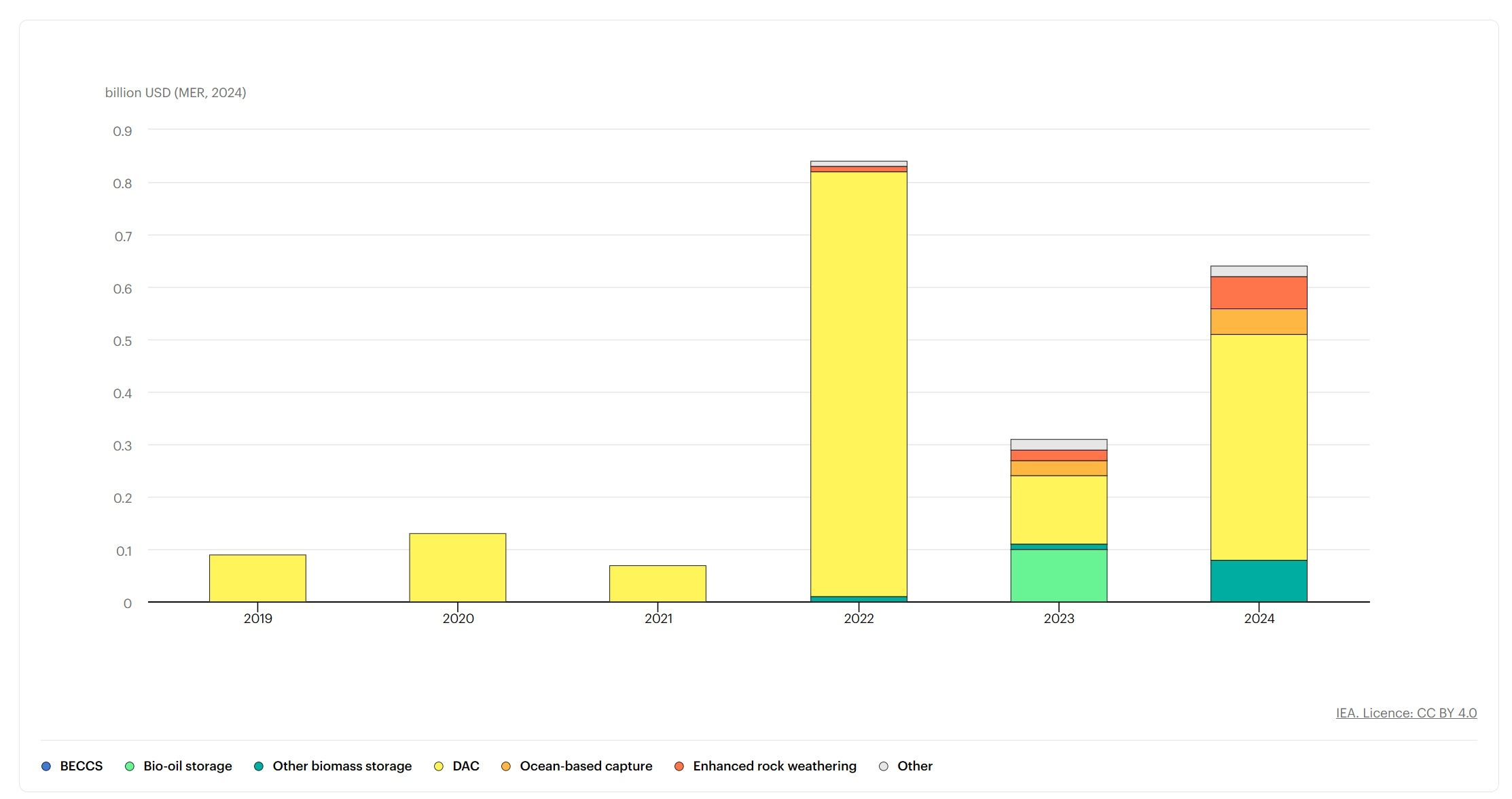
Image 1: Annual venture capital funding investment in selected carbon dioxide removal technologies, 2019-2024
Source: IEA (2025)
What vehicles exist for allocator exposure?
Unlike more mature NbS asset classes — where dedicated fund managers with defined LP structures, audited track records, and named vehicles have emerged — ERW currently lacks an equivalent fund layer. This reflects the early-stage nature of the market. Allocators should approach ERW with that structural reality in mind. At present, exposure is accessed through three routes:
-
Direct Corporate Offtakes: Forward purchase agreements with developers, structured as procurement contracts rather than financial instruments. This is currently the dominant route but remains most appropriate for large corporations with net-zero commitments rather than institutional allocators seeking financial returns.
-
Venture Equity: Early-stage equity into ERW developer companies is currently the most accessible route for institutional allocators seeking financial returns, typically accessed through broader CDR or climate tech vehicles rather than ERW-dedicated funds. VC firms including Gigascale Capital, Congruent Ventures, Übermorgen Ventures, and Lowercarbon Capital have taken direct equity positions in ERW developers, though no publicly known ERW-only fund exists and exposure remains embedded within wider climate tech portfolios rather than available as a standalone allocation.
-
Emerging Project Finance: A small number of developers are beginning to structure individual projects as bankable assets, particularly where a signed offtake provides the revenue certainty required for debt. This remains nascent and case-by-case.
The most likely near-term vehicle for institutional allocators is blended finance, where concessional capital absorbs early MRV risk and crowds in commercial debt at the project level. As MRV standards mature and the developer ecosystem consolidates further, dedicated fund structures are a likely medium-term development — but allocators entering today should expect to operate closer to the venture and offtake layer than to a conventional fund relationship.
What are the current market dynamics and revenue models?
As of early 2026, ERW carbon removal prices typically range from $200 to $500 per tonne of CO2. While these figures are higher than biological removals, they are competitive with Direct Air Capture, which ranges from $600 to $1,000. The commercial case is further strengthened by multi-revenue models where developers generate income by selling rock amendment as a low-cost alternative to agricultural lime, which reduces the risk profile for institutional lenders. Looking ahead, modeling suggests costs could fall toward $100–$130 per tonne by mid-century as supply chains mature and fixed MRV costs are spread across larger volumes.
What are the primary impediments to scaling this solution?
The most consequential constraint facing ERW is financial. A pronounced gap exists between the early-stage venture capital that has funded technology development and the large-scale project finance needed for giga-tonne deployment. For institutional allocators, this gap is also the most significant near-term opportunity.
Venture capital has been effective at funding MRV innovation and developer formation, but is structurally ill-suited to finance the capital-intensive infrastructure — quarrying, industrial grinding, and logistics — that scale demands. Project finance, meanwhile, requires revenue certainty and standardised MRV that the market has only begun to develop. The result is a cohort of developers that have proven their technology but cannot yet access the capital needed to industrialise. Closing this gap requires three things to converge: harmonised MRV standards, aggregated long-tenor offtakes, and further platform consolidation of the kind already signalled by the Terradot–Eion merger.
Blended finance is the most credible bridging mechanism. DFIs such as the IFC and regional development banks are well-positioned to deploy first-loss capital or guarantees that de-risk MRV uncertainty — the factors keeping commercial cost of capital prohibitively high.
For a large allocator, the most credible entry point today is a structured portfolio approach: a senior debt or mezzanine position in a consolidated ERW platform with proven offtake coverage, combined with a blended finance sleeve providing concessional exposure to EMDE projects where weathering rates are highest. The expected return profile sits between infrastructure and private equity, supplemented by carbon credit revenues and agricultural co-benefit income. For allocators with their own net-zero commitments, the additional value of high-integrity, long-duration removal credits further improves the blended return calculus.
What is the carbon credit outlook for ERW?
ERW is an emerging and scientifically promising approach within the voluntary carbon market, notable for the strong permanence of stored carbon, which compares favorably to the reversal risks common in biological carbon sinks. The market's credibility took a meaningful step forward in early 2025 with the issuance of the first independently verified ERW credits — marking the first time the sector met the evidentiary bar required for third-party verification. Current credit prices typically range from $200–$500 per tonne, with verification infrastructure provided by platforms including Puro.earth and Isometric. MRV methodology remains an active area of scientific debate, though the Terradot–Eion merger — which integrated Eion's patented direct measurement approach into a larger platform — signals that the market is beginning to resolve the monitoring bottleneck that has historically constrained credit issuance at scale. A reduction in costs toward $100/tonne is plausible as supply chains mature and fixed MRV costs are spread across larger volumes, though not guaranteed. Real agricultural co-benefits — improved soil pH, nutrient availability, and potential yield gains of 9–20% in some trials — may help justify premium pricing for buyers seeking credits with demonstrable biodiversity and food security co-benefits, though claims incorporating ocean acidification metrics remain largely aspirational rather than reflecting current market reality.
Enhanced Rock Weathering is positioned as a regenerative solution that can actively restore ecosystem health across both terrestrial and aquatic systems. Unlike traditional "gray infrastructure" climate interventions, ERW utilizes mineralogy to stimulate biological productivity and counteract environmental degradation.
Agricultural soils globally have been depleted of essential minerals due to decades of intensive farming and the excessive use of synthetic nitrogen fertilizers. ERW addresses this by replenishing the soil mineral bank. As silicate rocks such as basalt dissolve, they release macro and micronutrients that support plant growth and microbial diversity. Closely related to this is ERW's role as a natural pH buffer. Highly acidic soils — a widespread consequence of agricultural intensification — limit nutrient uptake and can generate toxic concentrations of aluminum and manganese that suppress crop growth and harm soil biota. By raising soil pH, ERW helps restore the chemical conditions that allow both crops and soil ecosystems to function effectively. This process is further reinforced by the soil's own biological community: microbes and mycorrhizal fungi have been shown to accelerate the weathering of silicate minerals, creating a positive feedback loop that amplifies both carbon drawdown and soil fertility over time.
These soil-level improvements translate, in some contexts, into measurable gains in agricultural productivity. Some experimental evidence points to meaningful yield improvements in basalt-amended plots, with studies in temperate climates reporting biomass gains in the range of 9% to 20% compared to control groups. While these yields could theoretically enable a “land-sparing” effect by reducing the need for agricultural expansion, this potential benefit is complicated by edge effects. Because a vast majority of the world’s tropical forests sit within one kilometer of a farmland edge—91% of the Brazilian Atlantic forest and 25% of the Amazon among them—the application of crushed silicates poses a risk of chemical encroachment into ecosystems where forest and farmland are intimately intertwined. However, it remains uncertain how far wind-blown dust or water-leached minerals penetrate into forest interiors, and what the consequences would be for biodiversity adapted to nutrient-poor, acidic mature soils. If these minerals were to alter soil chemistry significantly—shifting the ecological balance for specialist species adapted to low-pH environments—this could degrade the biodiversity hotspots that land-sparing is meant to protect, turning a potential co-benefit into a conservation liability.
The co-benefits of ERW extend beyond the terrestrial system. As bicarbonate ions generated through weathering are transported via waterways into the ocean, they contribute to ocean alkalinity enhancement, helping to neutralize carbonic acid and, at sufficient scale, moderate the effects of ocean acidification driven by the absorption of anthropogenic CO2. This matters particularly for marine calcifiers — organisms such as corals, shellfish, and certain plankton that depend on stable carbonate saturation states to build their skeletons and shells, and whose viability is increasingly threatened by acidifying conditions. Quantitative modeling suggests that alkalinity contributions from rock weathering can meaningfully increase carbonate mineral saturation in seawater, thereby supporting the resilience of coral reef ecosystems. A further aquatic benefit arises from the release of silica, which promotes the growth of diatoms — algae that can outcompete harmful cyanobacteria and thereby reduce the risk of toxic blooms, supporting healthier and more productive marine food webs.
These wide-ranging benefits must, however, be weighed against ecological risks that scale with deployment. Silicate rocks can contain trace concentrations of heavy metals including nickel, chromium, and vanadium. If these accumulate to hazardous levels through repeated application, they represent a material ESG risk: potential harm to soil biota, contamination of groundwater, health issues for farm workers, and reputational exposure for investors and corporate buyers. It is an active area of regulatory and scientific scrutiny, and ERW standard-setting bodies are currently developing feedstock characterisation requirements to address it. For investors, the quality of a developer's heavy metal monitoring protocol should be treated as a due diligence requirement. The credibility of ERW's broader co-benefit narrative ultimately depends on the transparency and rigour of this evidence base.
Enhanced Rock Weathering has emerged as a promising "high-capacity, high-durability" climate solution. Its role in a science-based net-zero pathway is centered on its ability to provide durable removal that is substantially more resistant to reversal than biological carbon sinks such as forests or agricultural soils.
This potential is considerable in scale. As illustrated in Image 2, the geographic distribution of removal capacity shifts over time, with South Asia, Sub-Saharan Africa, and Latin America emerging as dominant contributors by mid-century — regions where hot, humid conditions naturally accelerate weathering rates. Globally, some models suggest a peak annual CDR capacity of 2 to 4 gigatons of CO2 globally by 2050. In the United States alone, the widespread application of rock dust to croplands could sequester between 0.16 and 0.30 Gt CO2 per year by 2050, potentially rising to nearly 0.5 Gt by 2070. Yet even these figures underscore the broader challenge: durable CDR today amounts to less than 50 million tonnes annually, while 1.5°C-aligned scenarios demand up to 300 times that volume by mid-century.
Central to ERW's durability case is the fate of the carbon once removed. Carbon captured through ERW is stored primarily as dissolved bicarbonate in the ocean interior, with a sequestration timeline exceeding 1,000 years. This durability profile is broadly comparable to Direct Air Capture with geological storage, and significantly superior to reforestation or agricultural soil carbon.
This storage mechanism introduces an important accounting consideration known as carbon back-flux — the process by which a portion of bicarbonate ions in the ocean may exchange CO2 back to the atmosphere as part of the seawater carbonic acid equilibrium system. While current Earth system models indicate that this effect affects a minority of the stored carbon — with modelling by Beerling et al. (2023) estimating a residual back-flux of approximately 5% from shallow ocean re-equilibration, rising to around 25% from broader ocean outgassing by 2070 — the net removal remains substantially positive. Nonetheless, rigorous MRV frameworks must quantify and account for these factors when issuing carbon credits to ensure a genuinely net-negative climate outcome.
Beyond the question of what happens after carbon is stored, ERW must also account for the emissions generated before and during deployment — specifically those arising from the mining, grinding, and transport of rock feedstock. The step-by-step process depicted in Image 3 makes clear that each stage of the value chain — from basalt grinding to field application to riverine transport of bicarbonate — carries its own carbon cost that must be accounted for. Lifecycle assessments indicate that the carbon cost of ERW is generally low relative to other CDR technologies. In terms of energy demand, ERW requires approximately ≤1.1 MWh of final energy per tonne of CO2 removed — significantly less than energy-intensive Direct Air Capture systems. Under favorable conditions, such as silt-sized particles of ~10 μm, short transport distances, and low-carbon grinding energy, lifecycle emissions can be as low as approximately 51 kg CO2eq per tonne of CO2 captured. Furthermore, ERW offers secondary climate benefits by reducing on-farm emissions of nitrous oxide (N2O), a potent greenhouse gas. This synergy between carbon removal and non-CO2 gas mitigation makes ERW a promising tool for meeting 1.5°C pathways.
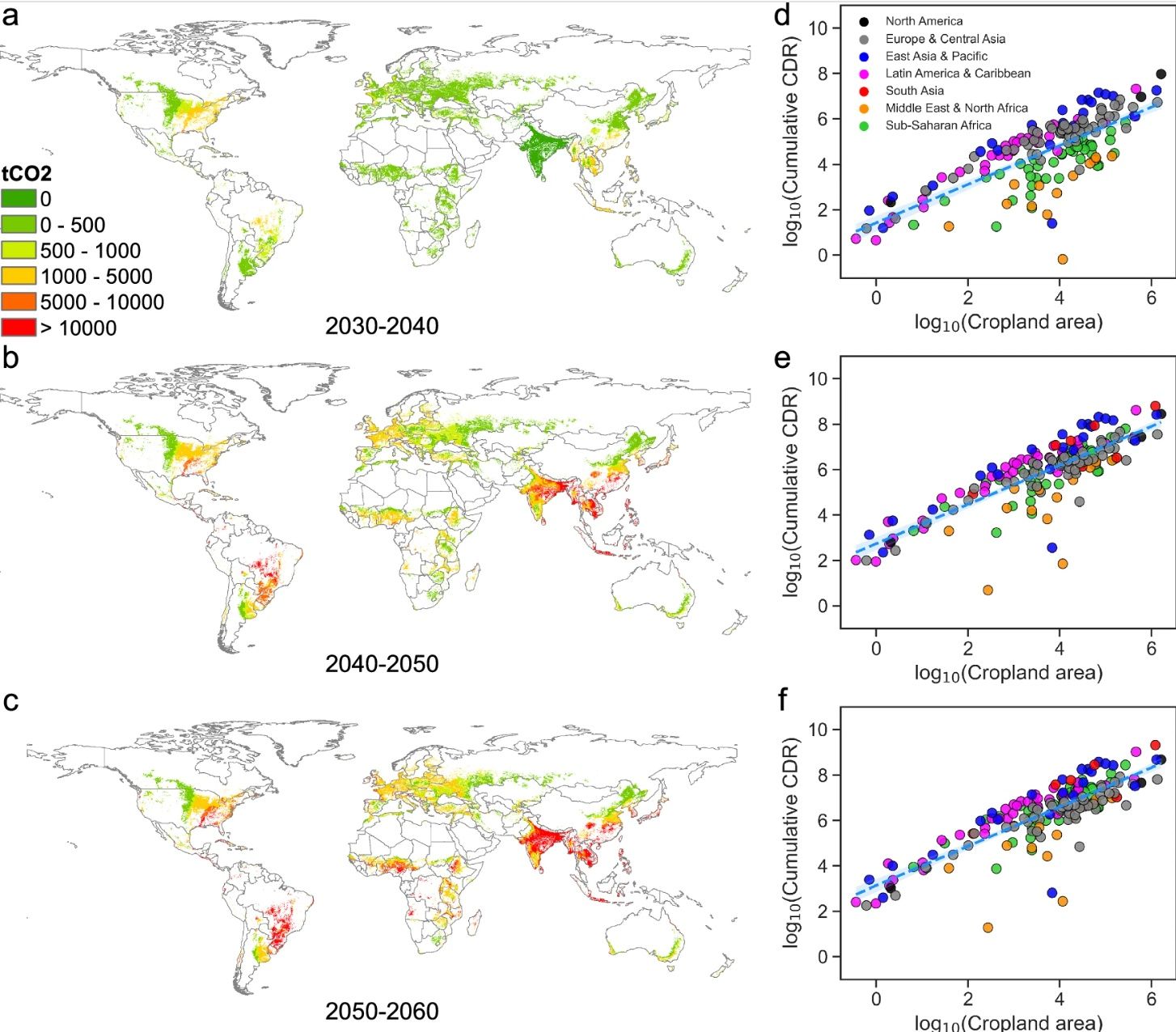
Image 2: CDR potential from ERW
Source: TU et al. (2026)
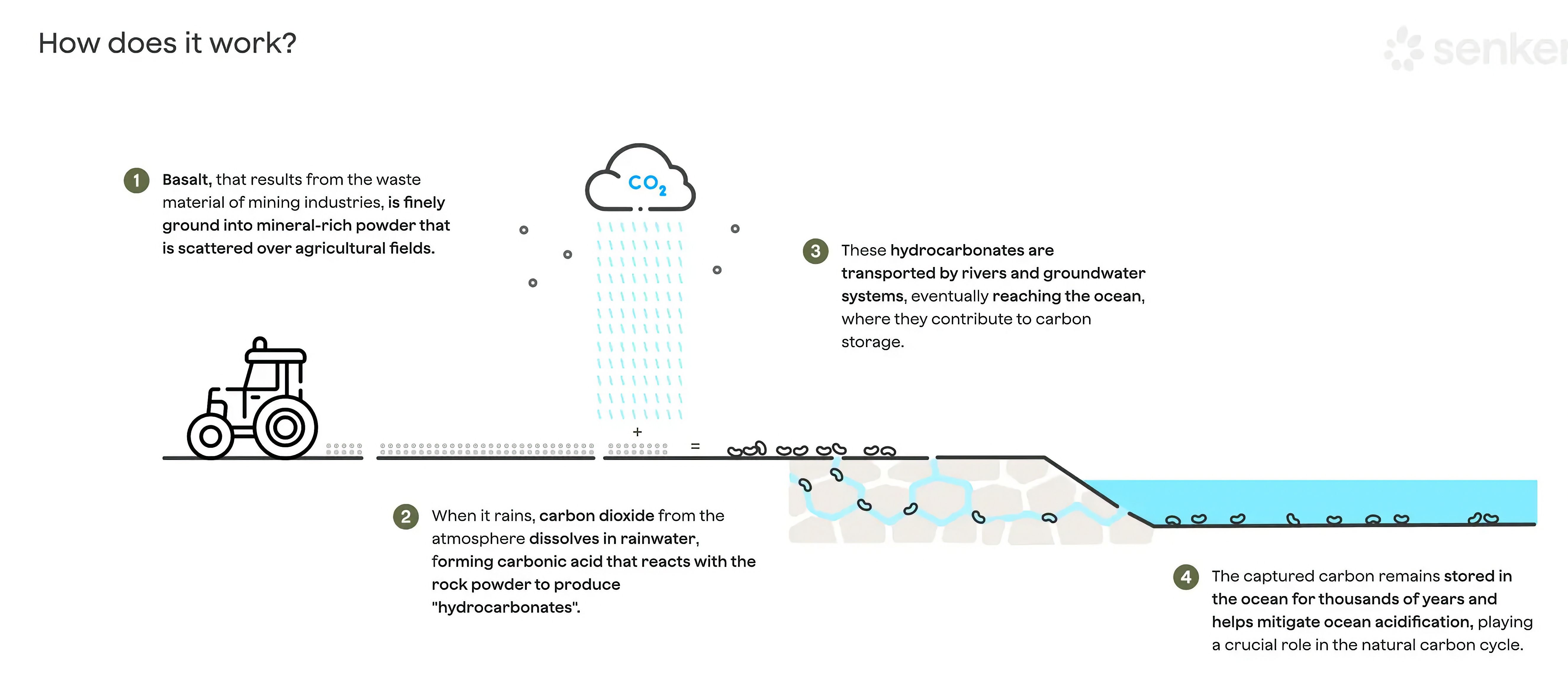
Image 3: How does ERW work?
Source: Senken (2026)
Social Justice
The large-scale implementation of Enhanced Rock Weathering is deeply intertwined with social justice, presenting a transformative opportunity for smallholder farmers and Global South economies, while also introducing systemic risks in the industrial mining supply chain.
ERW weathering rates are highest in the hot, humid, and acidic soil conditions prevalent in tropical "Global South" regions, giving countries like Kenya, India, and Brazil a significant competitive advantage in the emerging global CDR economy. Carbon credit revenues, for instance, can be shared directly with small-farm owners, providing a meaningful income stream that supports poverty alleviation. At the same time, for smallholders currently unable to afford traditional agricultural lime or fertilizers, rock dust provided by carbon projects acts as a vital soil amendment that boosts yields and strengthens food security. Taken together, these dynamics suggest that as the ERW market matures, the share of global carbon removal originating from low- and lower-middle-income countries could rise substantially, potentially fostering a more equitable global climate transition.
Yet the same "Gigaton Scale" ambition that generates these opportunities also necessitates a massive expansion of the silicate mining industry — and historical experience with mineral extraction offers a sobering counterpoint. Labor abuses represent perhaps the most immediate concern: the mining sector has a well-documented record of human rights violations, including child labor, forced labor, and hazardous working conditions. Beyond labor, the physical process of crushing and handling finely ground rock powder poses serious respiratory diseases for workers and nearby communities alike. The establishment of new quarries further compounds these challenges, as mining operations frequently compete with traditional territories, residential areas, or subsistence farmland. Without the meaningful application of Free, Prior, and Informed Consent (FPIC), such expansion risks deepening existing social conflicts and accelerating land dispossession.
Underlying all of these concerns is a more structural risk: that ERW could trigger a “resource curse”, in which extractive industries generate significant wealth that nonetheless fails to reach the local communities bearing the greatest environmental and social costs. Institutional investors and project developers must actively prioritize "procedural justice" — ensuring the meaningful involvement of all affected stakeholders from the earliest stages of project development. Evidence from mining-induced resettlement cases underscores the importance of robust ecological compensation frameworks that treat environmental justice and community well-being as inseparable goals. Ultimately, for ERW to deliver on its promise as a climate solution, its governance must move beyond corporate risk management and toward a rights-oriented paradigm — one that guarantees fair benefits for host communities and refuses to sacrifice local environmental quality in pursuit of global climate targets.
Details
GHG Reduction Potential 2050
2 - 4 Gt CO2e
Asset Class
Private Equity, Blended Finance, Venture Early Stage, Venture Growth Capital, Carbon Offsets
Solution Maturity
Emerging
Est. Current Market Size
$121 Million (total project investment as of early 2025)
Est. Market Size in 5 Years
n/a
Est. Capital Required by 2050
n/a
Carbon Credit Potential
High
Carbon Credit Potential Narrative
ERW entered the voluntary carbon market in early 2025 with its first independently verified credits, priced at $200–$500/tonne. MRV methodology remains contested, though market consolidation is addressing this. Costs could fall to ~$100/tonne as the sector matures, with agricultural co-benefits potentially supporting premium pricing.